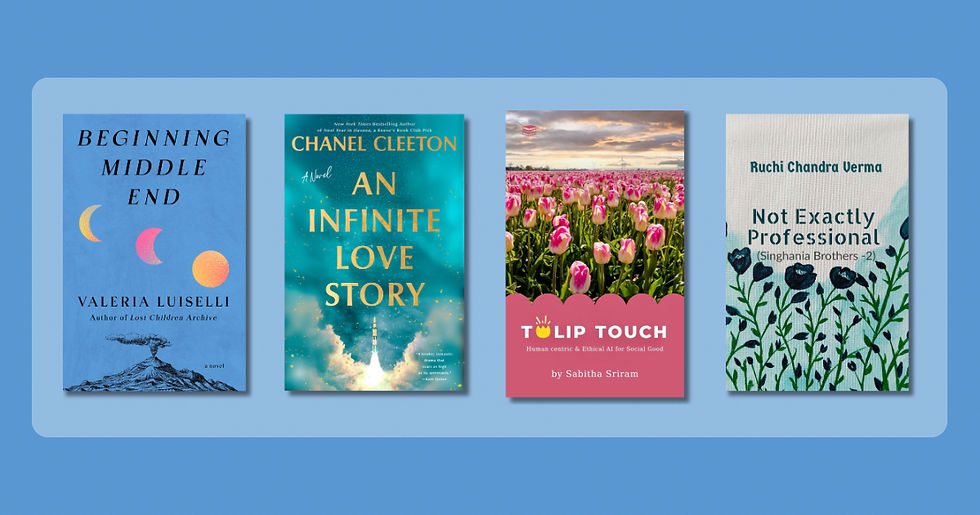
Hidden Gems You May Have Missed

We’ve all been there: staring at a physical or digital shelf, feeling like we’ve already experienced everything the world has to offer. We stick to the familiar names and chart-topping titles, but sometimes the most transformative experiences come from the stories that didn’t make the front page.
The truth is, for every blockbuster hit, there are dozens of masterpieces quietly waiting in the literary world’s corners. These works trade hype for soul, offering fresh perspectives and worlds that feel entirely new because they haven’t been over-explained by countless reviews. In this list, we’re stepping off the beaten path to spotlight these rare finds that deserve a permanent place on your nightstand.
Ghosted, Roasted and Going from Super Likes to Super Yikes!!
SALIS MANIA CHOICE AWARDS 2026 NOMINEE
In a digital landscape dictated by ruthless algorithms, genuine intimacy often feels like a high-stakes endurance sport. Enter Prajwal Kumar Domalapalli, whose sharply witty release, Ghosted, Roasted and Going from Super Likes to Super Yikes!!, offers a refreshing antidote to online cynicism.
While contemporary literature chases viral trends, Domalapalli takes the path less traveled. He strips away polished veneers, drawing directly from personal experiences with raw vulnerability, courage, and charm. Designed to turn you into the Lewis Hamilton of dating apps, the book balances tactical insight with side-splitting humor.
"Love demands presence, vulnerability , courage and unpredictable beauty.”
Soaked in self-aware wit and undeniable truth, Ghosted, Roasted... hits precisely because it is real. Stylish, hilarious, and surprisingly tender, it proves that while modern dating often leads to "Super Yikes," pursuing authentic connection remains entirely worth the ride.

Big Little Truths
FROM THE #1 NEW YORK TIMES BESTSELLING AUTHOR OF BIG LITTLE LIES, THE RUNAWAY PHENOMENON THAT INSPIRED THE MEGA HIT HBO SERIES
In this highly anticipated sequel, Liane Moriarty examines the complexities of modern women’s lives, shining light on family dynamics and long-hidden truths with wit and compassion. Whether you’ve read Big Little Lies or not, this is the perfect novel for longtime fans and new readers alike.
“Equal parts juicy, gripping, and impossible to put down . . . I loved diving back into the lives of these unforgettable characters.”—Freida McFadden, #1 New York Times bestselling author of The Housemaid
The last time we saw the women of Big Little Lies—Madeline, Celeste, Jane, Renata, and Bonnie—their children were five years old. If someone wasn’t invited to a birthday party, feelings were hurt. But ten years have passed and the kids are in high school, navigating all of the drama that accompanies teendom (goodbye playdates, hello drugs, sex, and alcohol).
When the high school principal receives a threatening package in the mail, word quickly spreads throughout the community and parents are in an uproar. But Madeline, Celeste, Jane, Renata, and Bonnie have other things to worry about. Celeste’s mother-in-law, Mary Louise, is behaving oddly—is it old-age forgetfulness and bluntness or something more sinister? Madeline is facing perhaps the biggest challenge of her life, Jane is at a dangerous fork in her marriage, Bonnie has realized there’s only so much solace in yoga. And Renata? Renata is living her best life—revenge is sweet.
When a stranger begins lurking around the school asking supposedly innocent questions, this tightly connected group of women must finally face the full repercussions of the big little truths they have and haven’t shared with their kids. Because the stakes are now much higher than not being invited to an ice-skating party—and the ice has never been thinner for any of them.

The Amateur
From the #1 New York Times bestselling author of Midwives and The Flight Attendant: When a young woman, a golf prodigy, kills a caddy with a stray ball at the country club, the investigation of this freak accident reveals a dark and shocking tale of secret affairs, predatory men, and a teenager on trial.
1978: It is the first Thursday in August and temperatures are flirting with ninety when Mira Winston, eighteen years old, drives a golf ball from her tee toward the practice net near the clubhouse and caddy shack. The golf ball, weighing 1.6 ounces, tears through the net, traveling 150 miles per hour, and slams, with sickening force, into the temple of a high school junior named Kenny Foster, rupturing an artery and unleashing a torrent of blood. Kenny brings his hand to the side of his head, then topples onto his side. He’s dead before the ambulance even arrives.
In the wake of this terrible accident—and everyone, at first, agrees it was an accident—Mira looks for comfort in all the wrong places: In her lover, Theo Catton, a married man three decades her senior. In her mother, a well-kept woman with secrets of her own. In the dead caddy’s little sisters, girls bewildered by grief. But when the investigators look more closely at the torn net, when a detective recalls Mira’s history of recklessness, and when Kenny’s father spies Mira with her married lover, the affluent and mannered community turns on this once-promising young woman. A gripping story that takes the reader from the sun-soaked greens of a tony Westchester country club to the fluorescent-lit stand of a county courtroom, The Amateur asks: What happens when one small moment—a swing, a ball, a piece of string—changes the course of an entire life?

Amrit Kalash
SALIS MANIA CHOICE AWARDS 2026 NOMINEE
Mythology remains the ultimate timeless muse, but few breathe new life into ancient Indian lore quite like Divya Narain Upadhyaya in Amrit Kalash. Crafting an exquisite bridge between classical heritage and modern sensibility, Upadhyaya reimagines sacred texts as vibrant, highly cinematic fiction.
The author dives into ancient wisdom to unpack profound truths about the human condition, all while preserving the authentic, sacred spirit of the original stories. From our political architectures to everyday culture, this ancient legacy quietly shapes our modern world, yet so much of it remains unexplored. Upadhyaya makes these foundational narratives effortlessly accessible.
Having dedicated his life to unveiling these shimmering literary pearls for contemporary readers, Upadhyaya delivers a work that is both steeped in tradition and intensely relevant today. Amrit Kalash isn't just a book, it is a chic, indispensable guide to reclaiming our rich collective heritage. Consider it mandatory reading.

The Intrigue
NATIONAL BESTSELLER
A MOST ANTICIPATED BOOK: The New York Times, People, Book Riot, Southern Living, Marie Claire, Time
From the New York Times bestselling author of Mexican Gothic and Velvet Was the Night comes a sizzling noir about desire, danger, and greed, in which seduction is the ultimate con.
“Lush and passionate with magnetic prose . . . The Intrigue will grab you by the throat and not let go until its earth-shaking finale!” —S. A. Cosby, author of King of Ashes
Handsome con artist Ulises has long charmed lonely women via letters in order to steal their money, but money is hard to come by in 1940s Mexico. Ulises knows his looks won’t last forever, and he’s desperate to get his hands on a real fortune.
He thinks he’s found it when he captivates his newest correspondent, Perla, the owner of a small-town boardinghouse in picturesque Veracruz. But when he meets her, he finds something he didn’t expect. The woman has a niece, Inés, who is as observant as she is desperate to escape her aunt’s household.
When Inés discovers Ulises’s true intentions, she wants in on the scheme. They’ll convince her aunt that Ulises is a great catch, Perla will marry him, and her money will vanish. Easy, fast, and clean. But Perla is not the desperate, silly spinster Ulises imagines. She harbors secrets. And although Ulises does not believe in true romance, Inés is more alluring than he bargained for. Suddenly, a simple plan may become perilously complicated.
Venture into the streets of a small town where a patina of convention and good manners conceals a cauldron of avarice and lust.

Not so Happily Married
SALIS MANIA CHOICE AWARDS 2026 NOMINEE
Ruchi Chandra Verma’s Not so Happily Married grabs hold early and refuses to let go. From the opening pages, Verma builds a world that feels thoroughly lived-in, anchoring its domestic drama in tangible, flesh-and-blood characters facing the familiar friction of real life.
At its heart lies the classic Indian family clash, the tension between a mother-in-law and a newlywed bride, rendered with observant, sharp narration. Verma captures the quiet, disorienting shifts of adulthood with striking precision, perfectly captured in a single, devastating truth: "The house I grew up in was no longer my house."
As the story progresses, narrative momentum continues to build, driven by authentic characterization and a plot deeply inspired by actual lived experience. Verma balances emotional weight with effortless pacing, crafting an intimate portrait of domesticity, displacement, and the fragile expectations of married life. It is an engrossing start to a deeply relatable tale.

From Presence to Power
Why do some fights for justice hit a wall while others succeed? What does it take to win social change, especially now? It comes down to understanding one thing: the difference between presence and power.
Failing to do so is one way we got into this mess, but understanding how power really works is a big part of how we get out of it.
Rashad Robinson would know. A social change strategist, he’s spent more than twenty years at the highest levels of leadership in two of the most significant social movements of our time: the fight for LGBTQ rights and the fight for racial justice. He’s taken on tech giants and the criminal justice system, politicians in Washington and corporate executives in Hollywood. He’s been on the front lines of protest and in the back rooms of negotiation.
Robinson argues that achieving presence—the visibility of marches, media fads, and making issues popular—is not the same as gaining the leverage required to change the rules for how society works or change the decisions that politicians, corporate executives, and other people in authority make.
This book offers a set of essential lessons about power for anyone who wants to understand it, gain it, and use it to win the progress we all deserve—and to defeat the forces trying to take our freedoms away. Robinson provides the tools needed to help everyday people build real leverage in systems designed to prevent them from doing so.
As someone who helped shape the resistance after the 2016 election, and continues to help leaders at every level find innovative ways to fight back and win progress today, Robinson offers a hopeful, practical guide to achieving positive impact in the most challenging times.

Make Nice
By Ryan Effgen
Sandwich meets The Wedding People in this irresistible comedy of manners as three generations of a family—a snail scientist, a soon-to-be divorcée, her teenage daughter, a hapless con man, and their feckless patriarch—descend on a ritzy Lake Michigan vacation island.
"Engaging and charming, perfect for your own summer vacation."
—Elin Hilderbrand, #1 New York Times bestselling author of The Hotel Nantucket
When the Pickford siblings arrive at The Grand Hotel—a nostalgic tourist paradise of horse-drawn carriages, muddled cocktails, and white sweaters on the tennis court—they have every intention of spending the long weekend making nice. Pete, the nation’s foremost expert on gastropods (mollusks), is keen to wade around the lake in search of a rare and exciting Carthusian snail. Viv, reeling from the secret revelation that her husband is gay, is determined to put on a brave face for her daughter. And Corey, a charming, handsome grifter, has lucked into five pounds of cocaine he plans to sell to the first dumb rich guy he can find.
But when Pete falls for the alluring mother of a local kid, when Viv’s daughter gets up to teenage trouble, and when Corey finds the wealthy guests less interested in party drugs than golf clubs and waffle cones, the long weekend of family bonding veers into disaster. Why did their father bring them to this cushy island resort in the first place? And why does Corey, the biggest screw-up of them all, seem to be the only one who knows the truth? As secrets spill, old flames are fanned, and an innocent snail is crushed beneath the unrelenting heel of a hiking boot. In a story that is as sneakily wise as it is absurdly funny, Ryan Effgen’s debut shows how sometimes the people who bring out your worst—your family—can also be the ones to bring you out of your shell.

The Other Wife
“Extraordinary. A story about belonging in liminal spaces, and longing for things seemingly just out of reach. A searing, beautiful book.” —Kiley Reid, New York Times bestselling author of Come and Get It
"Complex and enduring...We would follow Zuzu anywhere." —Oprah Daily
What would you risk for a second chance with the one who got away?
Zuzu met Cash on the first day of college, and nothing was ever the same. Tall, witty, and popular, Cash’s friendship represented a kind of belonging for Zuzu, who had always felt like an outsider growing up mixed race in her rural hometown. Though their friendship was charged with longing, it never progressed to romance. Now approaching her forties, Zuzu has built a stable life with her wife Agnes, but she’s haunted by the choices that have shaped her.
When a sudden loss pulls Zuzu back to her hometown, she begins to unwind the turns that have led her here. Will she embrace the life she’s made, or risk everything for a chance to chase the past? A novel that speaks to the unfulfilled desires and euphoric nostalgia that’s particular to the beginning of middle age, The Other Wife is as heartfelt as it is daring in its deep reckoning with the past and quest for true joy.

Moderation
Longlisted for the 2026 Women’s Prize in Fiction
Top Ten Book of 2025 by The Atlantic and Slate
Best Book of 2025 by The New Yorker, TIME, Kirkus Reviews and more.
“A love story for those who love Severance (both Ling Ma’s book and the unaffiliated Apple TV+ series). . . ambitious, challenging, and brilliant.” —Elle
“Castillo’s flinty satire of the tech industry [transforms] into a sultry romance novel.” —The Atlantic
A bold and inventive novel about real romance in the virtual workplace— bringing Castillo's trademark wit and sharp cultural criticism to an irresistible story about the possible future of love.
Girlie Delmundo is the greatest content moderator in the world, and despite the setbacks of financial crises, climate catastrophe, and a global pandemic, she’s going places: she’s getting a promotion. Now thanks to her parent company Paragon’s purchase of Fairground—the world’s preeminent virtual reality content provider—she’s on the way to becoming an elite VR moderator, playing in the big leagues and, if her enthusiastic bosses are to be believed, moderating the next stage of human interaction.
Despite the isolation that virtual reality requires from colleagues, friends, and family, the unbelievable perks of her new job mean she can solve a lot of her family's problems with money and mobility. She doesn't have to think about the childhood home they lost back in the Bay Area, or history at all—she can just pay any debts that come due. But when she meets William Cheung, Playground’s wry, reticent co-founder (now Chief Product Officer) and slowly unearths some of his secrets, and finds herself somehow falling in love, she’ll learn that history might be impossible to moderate and the future utterly impossible to control.

Lights Out, Minds On
SALIS MANIA CHOICE AWARDS 2026 NOMINEE
In Lights Out, Minds On, Priyanka Awasthi attempts a noble feat: constructing a bridge to the high-stakes drama of Formula 1 during its unprecedented global renaissance. At its best, the book vibrates with genuine affection, offering a sharp, welcoming entry point for newcomers trying to understand the sport's sudden cultural momentum. Awasthi successfully captures the electric energy of the grid, handing the curious bystander a metaphorical paddock headset.
Yet, in racing, timing is everything, and here the book’s engine falters. For seasoned enthusiasts, the narrative lacks the structural downforce required to navigate F1's technical complexities, settling instead for surface-level pointers. The stacking of ideas feels hurried, like a crowded mid-field restart rather than a calculated strategy. While it misses a top-ten finish due to this lack of depth, Awasthi has laid down a promising chassis. A more rigorously tuned second volume could easily challenge for the podium.

Thinking Inside the Box
“This cultural and personal history of crosswords and their fans, written by an aficionado, is diverting, informative, and discursive.” —The New York Times Book Review, Editors’ Choice
A delightful, erudite, and immersive exploration of the crossword puzzle and its fascinating history.
Almost as soon as it appeared, the crossword puzzle became indispensable to our lives. Invented practically by accident in 1913, when a newspaper editor at the New York Worldwas casting around for something to fill empty column space, it became a roaring commercial success almost overnight. Ever since then, the humble puzzle has been an essential ingredient of any newspaper worth its salt. But why, exactly, are the crossword’s satisfactions so sweet?
Blending first-person reporting from the world of crosswords with a delightful telling of its rich literary history, Adrienne Raphel dives into the secrets of this classic pastime. Thinking Inside the Box is an ingenious love letter not just to the abiding power of the crossword but to the infinite joys and playful possibilities of language itself.

The Hidden Habits of Genius
“An unusually engaging book on the forces that fuel originality across fields. ” - Adam Grant
Looking at the 14 key traits of genius, from curiosity to creative maladjustment to obsession, Professor Craig Wright, creator of Yale University's popular “Genius Course,” explores what we can learn from brilliant minds that have changed the world. Einstein, Beethoven, Picasso, Jobs. The word genius evokes these iconic figures, whose cultural contributions have irreversibly shaped society. Yet Beethoven could not multiply. Picasso couldn’t pass a 4th grade math test. And Jobs left high school with a 2. 65 GPA.
What does this say about our metrics for measuring success and achievement today? Why do we teach children to behave and play by the rules, when the transformative geniuses of Western culture have done just the opposite? And what is genius, really?
Professor Craig Wright, creator of Yale University’s popular “Genius Course,” has devoted more than two decades to exploring these questions and probing the nature of this term, which is deeply embedded in our culture.
In The Hidden Habits of Genius, he reveals what we can learn from the lives of those we have dubbed “geniuses,” past and present. Examining the lives of transformative individuals ranging from Charles Darwin and Marie Curie to Leonardo Da Vinci and Andy Warhol to Toni Morrison and Elon Musk, Wright identifies more than a dozen drivers of genius—characteristics and patterns of behavior common to great minds throughout history.
He argues that genius is about more than intellect and work ethic—it is far more complex—and that the famed “eureka” moment is a Hollywood fiction. Brilliant insights that change the world are never sudden, but rather, they are the result of unique modes of thinking and lengthy gestation.
Most importantly, the habits of mind that produce great thinking and discovery can be actively learned and cultivated, and Wright shows us how. This book won't make you a genius. But embracing the hidden habits of these transformative individuals will make you more strategic, creative, and successful, and, ultimately, happier.

When the Earth Breathes, Volume 1
By Shree Shambav
SALIS MANIA CHOICE AWARDS 2026 NOMINEE
In an era when environmental writing often arrives wrapped in urgency, statistics, warnings, and calls to mobilize, When the Earth Breathes, Volume 1 by Shree Shambav takes a quieter path. The book does not ask the reader to become an activist overnight. Instead, it proposes something smaller and perhaps more difficult: to notice.
Shambav’s central idea is disarmingly simple. Before attempting to “save the planet,” one must learn to see it again. The author encourages readers to reconnect with the natural world through deliberate attention to everyday moments. The practices suggested are modest: stand barefoot on soil or stone, place a palm on the ground, sit silently for ten minutes, or return to a place that once felt alive: a park, a riverbank, a street lined with trees. These gestures are framed not as spiritual spectacles but as exercises in perception.
Throughout the book, Shambav relies on anecdotal storytelling drawn from observation and memory. The narratives describe roots bending around stones, leaves orienting toward light, and birds nesting in spaces where humans have momentarily withdrawn their noise. The tone is reflective and patient, and the language remains accessible, making the book approachable for readers without a background in environmental philosophy.
At times, however, the stories blur together. Many of the examples follow a similar structure, reinforcing the same lesson in slightly varied settings. While the intention is clearly to underline the book’s theme of attentive living, a wider range of narratives might have strengthened the argument and added greater texture to the reading experience.
Yet the book’s power lies less in narrative variety than in its insistence on small rituals of awareness. One suggestion in particular lingers long after the pages are closed: touch a tree every day. The act is so simple it borders on the obvious, yet the author presents it as a radical gesture of reconnection. In a culture accustomed to grand solutions, Shambav proposes a quieter beginning.
The book repeatedly returns to what it calls “micro-sufferings” - small, often overlooked signs of environmental strain. A damaged patch of soil, a struggling tree, a neglected corner of a park. Learning to notice these details, the author argues, is the first step toward a deeper relationship with the Earth.
When the Earth Breathes, Volume 1 is less a manifesto than an invitation. It asks readers not to rush toward solutions but to pause long enough to hear what the Earth might already be saying. In Shambav’s telling, that act of listening is where any meaningful journey must begin. 🌱🌍

The Seeker’s Gold
Book by Shree Shambav
SALIS MANIA CHOICE AWARDS WINNER
In The Seeker’s Gold, Shree Shambav spins a story that feels plucked from the luminous fabric of Arabian Nights. Rich with atmosphere yet stripped of ornament, the novel blends simplicity with depth, inviting readers into a world where every detail feels deliberate and alive.
At its heart is a seeker, a restless traveler who dares to leave the familiar behind in pursuit of something greater. Through his journey, Shambav explores themes of ambition, loss, freedom, and the hidden power of memory. The narrative is not rushed; instead, it lingers, offering meditative reflections on what we choose to value and what we too easily forget.
Shambav’s language is elegant yet unpretentious, drawing readers into an interior landscape as vivid as the deserts, cities, and crossroads the seeker traverses. Each line feels like a fragment of wisdom, a parable in miniature. Rather than focusing on spectacle, the novel’s strength lies in its emotional resonance and its ability to evoke the timeless truths that lie beneath our desires.
The Seeker’s Gold is a quiet, evocative work that rewards readers willing to slow down and reflect. It is a story less about reaching a destination than about what is uncovered along the way, and it lingers long after the final page has been turned.